Category: Uncategorized

  • Empowering Protection: The Essential Role of Abuse Prevention Education in Christian Schools

    Empowering Protection: The Essential Role of Abuse Prevention Education in Christian Schools

    “The prudent see danger and take refuge, but the simple keep going and pay the penalty.”

    — Proverbs 22:3

    The Necessity for Abuse Awareness and Prevention Education in Christian Schools

    The urgent need for abuse awareness and prevention education in Christian K-12 schools cannot be overstated. Alarming statistics indicate that 1 in 3 girls and 1 in 6 boys under the age of 18 experience abuse, with over half of these incidents involving a perpetrator known to the victim (ECAP, n.d.).  However, 95% of abuse cases can be prevented through education (ECAP, n.d.), underscoring the powerful role that proactive, well-rounded instruction can play in protecting students. Recognizing this, Christian schools are encouraged to adopt structured abuse awareness programs that promote discernment, wisdom, and strong partnerships with parents. This proactive stance equips students with essential life skills while maintaining alignment with a biblical worldview.

    Equipping Students with Discernment and Wisdom

    In the realm of abuse prevention, teaching discernment and wisdom is vital. Abuse situations often involve manipulation and subtle forms of grooming that can be difficult for children to recognize. Developing students’ abilities to discern right from wrong, as aligned with biblical teachings, enables them to recognize dangerous situations. Hebrews 5:14 reminds us that the practice of discernment allows individuals to “distinguish good from evil,” a skill that is essential for navigating today’s complex social landscape. By integrating discernment skills into abuse prevention education, Christian schools not only empower students to protect themselves but also reinforce the values that are central to their faith.

    The Evangelical Council for Abuse Prevention (ECAP) has highlighted the unique challenges faced by Christian communities regarding abuse prevention. Abuse is not limited to secular environments and, unfortunately, can infiltrate faith-based communities as well. This reality calls for a transformation within Christian institutions, one that actively works to make these communities less susceptible to abuse. Embracing educational programs that focus on discernment allows Christian schools to address these issues head-on while maintaining the theological integrity of their teaching.

    A Collaborative Approach with Parents

    Traditionally, Christian schools have deferred the responsibility of teaching abuse prevention to parents. While the family remains the primary foundational unit for a child’s education, partnering with parents in abuse awareness initiatives offers a more robust approach. Collaborative efforts between schools and parents help reinforce safety messages and create a consistent narrative that children can rely on. Christian schools and classrooms should seek instructional materials that are accompanied by resources designed for parents, enabling families to continue this delicate conversation at home. This continuity ensures that children are supported both at school and at home, fostering an environment where they feel safe and informed.

    The Need for a Biblically-Aligned Curriculum

    With increasing mandates from educational authorities for abuse prevention programs, Christian schools are faced with the challenge of finding appropriate materials. Most of the available resources reflect secular or humanistic perspectives, which may conflict with a biblical worldview, particularly on issues related to relationships, sexuality, and identity. By promoting a biblically grounded abuse prevention curriculum, Christian schools can address these crucial topics in a way that aligns with their values. Abuse awareness instruction would not only educate students on the signs of abuse but also frame the discussion around the sanctity of relationships and the dignity of each individual, as emphasized in scripture. Resources should teach students to identify abuse, set personal boundaries, and understand God’s design for healthy relationships. Programs such as Safeguards 4 Kids along with parent resources such as Safeguards: Shielding our Homes and Equipping Our Kids by Julie Lowe, offer biblically sound guidance that supports this mission.

    Safeguarding Our Future: The Call to Action for Christian Schools

    Christian K-12 schools play a vital role in nurturing students’ physical, emotional, and spiritual well-being. By adopting abuse awareness and prevention education, they fulfill a critical part of their mission to guide students in wisdom and righteousness. Partnering with parents and utilizing a biblically aligned curriculum, Christian schools can offer students the tools they need to stay safe and informed, thereby honoring God’s calling for a future filled with hope and security. As Isaiah 54:13 encourages, “All your children shall be taught by the Lord, and great shall be the peace of your children,” embracing abuse prevention education is a step toward ensuring that peace for every student.

    Recommended Actions for Schools

    Christian schools have a sacred responsibility to protect and nurture their students, ensuring their safety and promoting their well-being. The following actions provide a roadmap for implementing effective abuse prevention measures while remaining firmly rooted in a biblical worldview:

    1. Ensure Safeguard Measures Are in Place: Establish and maintain robust safety measures to protect students. Use tools such as assessment checklists to evaluate your school’s readiness to prevent and respond to abuse. These checklists can help identify gaps in current policies and ensure all practices meet high standards of accountability.
    2. Train Staff and Develop a Response Plan: Equip all staff members with training to recognize abuse and respond effectively to reports. Having a clear and actionable response plan is essential for addressing both internal and external allegations of abuse. This plan should prioritize transparency, compassion, and compliance with both legal and biblical standards. The Evangelical Council for Abuse Prevention (ECAP) has resources to support schools is developing a quality response plan.
    3. Foster a Culture of Transparency and Safety: Create policies that promote accountability and protect students, such as background checks for staff and volunteers, reporting protocols, and guidelines for adult-student interactions. Encourage open communication, giving students safe and accessible ways to report concerns.
    4. Regularly Evaluate and Update Policies: Commit to ongoing assessments of your school’s safeguards. Regular reviews of policies, curricula, and partnerships ensure they remain effective, legally compliant, and aligned with biblical principles.

    Reference:

    ECAP-Evangelical Council for Abuse Prevention. (n.d.). The Problem of Abuse. https://www.ecap.net/abuse

  • Why We Must Teach Kids Safety Skills

    Why We Must Teach Kids Safety Skills

    Young people are in crisis. There is danger and evil, sickness and disease, corruption, deception, and temptation. We cannot live in this world without being touched by it, and our children are, and will be, touched by such perils. We are also warned in scripture that these things are realities for us all. Consider what 1 John 5:19 says: “We know that we are from God, and the whole world lies in the power of the evil one.”  We are told that: “Evil people and imposters will go on from bad to worse, deceiving and being deceived.” 2 Timothy 3:13

    Young people are growing up in an increasing godless world, while also in deep need for wisdom and discernment to navigate it. More than ever, they need to know how to traverse the dangers around them.

    We should not be afraid to talk with confidence and with hope to our children about such things. In order to equip our kids live to in this world and not be of it, we must talk about the hard things. They must know we have something helpful to say, and we must instill in them the resources to do so. If we teach them well, doing so will not raise fearful kids, but competent kids.

    The foundation for this is threefold.

    First, we live in a broken, fallen world. Dangerous people prowl upon the weak and naïve. Evil is cunning; it deceives and entices. It promises pleasure but delivers brokenness. Evil is both done to us and seduces us from within. Accepting this reality means that we must raise children who can navigate and respond to potential dangers.

    Scripture is full of wisdom on how to respond. Matthew 10:16 tells us, “See, I am sending you out like sheep in the midst of wolves; so be wise as serpents and innocent as doves.” Proverbs 27:12 advises, “The prudent sees danger and hides himself, but the simple go on and suffer for it.” Proverbs goes on to reiterate, “One who is wise is cautious and turns from evil, but a fool is reckless and careless. (Proverbs 14:16).”

    Wise people see the potential for danger and take measures to protect themselves. Wise people are discerning, and turn from evil. Clearly, there is nothing good that comes from being unaware of the danger that exists in our world. Too often parents are unwilling to face the realities of the perils that exist in the world around us, and therefore conceal such realities from their children. But if we only shelter our children and do not equip them to act in wisdom, we inadvertently raise naïve, simple children who do not know how to make sense of evil and wisely navigate it.

    Second, we teach our children to navigate this world by giving them the ability to discern good from evil and right from wrong. Our culture is pressing in on our children, indoctrinating them with false views of romance and love, morality and truth, sexuality and identity. Our world  calls intolerant what is good and holy and calls good what God calls wicked.  Isaiah 5:20 says “Woe to those who call evil good and good evil, who put darkness for light and light for darkness, who put bitter for sweet and sweet for bitter!”

    Keeping our children safe means we teach them God’s ways—how he created us to live following him. Safety is built on the foundation of discerning right from wrong. Our children cannot safely navigate this world without the ability to distinguish good from evil. As a parent, my ultimate goal for my children is not to keep them safe (though it is a goal); rather, it is that my children would know the ways of God and walk in truth. Walking by faith and knowing good from evil will be their shield, and I believe that safety skills will be the fruit of teaching our children the ways of the Lord.

    Wisdom and discernment is the substance: “But solid food is for the mature, for those who have their powers of discernment trained by constant practice to distinguish good from evil (Hebrews 5:14).” Notice that the mature have “powers of discernment, trained by constant practice to distinguish good from evil.”

    Discussing the dangers our children might encounter helps us to understand how we can begin the process of equipping both ourselves and our children for setting up appropriate protective measures. Name the darkness that exists and equip your children to know how to both avoid it and how to respond to it if it finds them. Doing so, also protects our young people from the temptations that exist and the entanglements of destructive choices

    Knowing good from evil, right from wrong is primary; safety skills are secondary. Safety skills are a fruit of the way we parent our children. This is important to emphasize, because if we raise children who somehow have been shielded from the worst perils of this world but do not walk with the Lord, do not know right from wrong, or are unaware of the dangers that exist from within—we have failed them miserably.

    Third, we must understand that our safety ultimately rests in the hands of our God. Psalm 37:39–40 reminds us, “The salvation of the righteous is from the Lord; he is their stronghold in times of trouble. The Lord helps them and delivers them, he delivers them from the wicked and saves them, because they take refuge in hm.” Our ultimate hope is in a sovereign God who is our high tower, our very present help in trouble (Psalm 46:1, Proverbs 18:10). Consider the following passages:

    “Though I walk in the midst of trouble, you preserve my life, you stretch out your hand against the wrath of my enemies, and your right hand delivers me.” Psalm 138:7

    At the end of the day, God is the one who watches over us. As we explore Scripture, we will understand more deeply the call to be wise, to see danger and run from it (Proverbs 27:12,), to have courage (Proverbs 28:1, 2 Chronicles 32:7-9), and to stand up for those who cannot stand up for themselves (Isaiah 1:17, Proverbs 31:8-9). We are not to be passive in our engagement with injustice, danger, mistreatment, and evil. We must respond to it, while resting in our ultimate Protector.

    This blog was first published at ccef.org and was adapted from content found in Safeguards: Shielding Our Homes and Equipping Our Homes ©2022 by Julie Lowe. Used by permission of New Growth Press. May not be reproduced without prior written permission.

  • Five Ways You Can Protect Your Kids From Sexual Abuse

    Five Ways You Can Protect Your Kids From Sexual Abuse

    There is a growing alertness among parents, educators, caring adults and the church about the need to teach kids tangible ways to stay safe. Until children are old enough to keep themselves safe, it is the job of parents and concerned adults to do so.  Since you and I can’t always be with children, we are often at the mercy of adults we chose to trust or our child’s ability to navigate situations. For this reason, it is always the right time to be educating our children on concrete, child-appropriate safety skills.

    Every child is different. Some are naturally more cautious or distrustful, others are carefree and risk-takers. It is helpful to know your child well and shape your conversations based on what you know they need to hear and learn.

    Below are five ways you can begin to train/ educate your children in safety skills.

    1. Teach kids developmentally appropriate views of sex, sexuality and their bodies. Kids who know correct body parts, God’s view of sex/sexuality (as well as the boundaries in which it is intended), are more likely to be prepared when they see the corruption of such things. Kids need to grown up not looking at these things as shameful or bad, but part of God’s creation and good. The more they have a positive, accurate view of these things, the more likely they are to spot the counterfeit. They will also know to tell someone when it happens.
    2. Instruct kids to respect their bodies and respect the bodies of others. Respect means you do not touch people in their private parts (and please do not be afraid to be specific) nor should anyone touch them. It means you do not do or say things that makes someone else uncomfortable. We need to give examples, role play and brainstorm all the ways this could play out. Be prepared to give concrete examples. (you do not: hug someone who does not want to be hugged, ask them to remove clothing, make inappropriate comments, show them pictures, video, movies that hurt/offend etc). Language like respect and love show kids what is valuable. We must then demonstrate what it looks like practically. What is respectful/ not respectful? Role Play and let them give examples. What is loving/ not loving – and why? Role play, and talk it through. If we do not talk, role play and brainstorm, they will be caught off guard by another who wants to redefine what love and respect is – and it will likely be a corruption of those terms.
    3. Train kids to pay attention when something (or someone) does make them uncomfortable. They may feel uncomfortable for lots of reasons: something is confusing to them, it pushes them outside their comfort zone, or they are put it a risky situation and can’t make sense of it. This is a tricky subject because many argue you should never make a child do things that make them uncomfortable – especially when it comes to giving affection. The argument states it makes children more likely to ignore signs of abuse. However, I believe it is a better principle to teach kids to pay attention to what makes them uncomfortable and why. That means teaching them the skill of discernment. This will take practice, role playing and a variety of situations regularly placed before them. It means practice, conversation,  and practice. Point out what makes them uncomfortable and talk through the reasons; help them decide what to do with each scenario. It is a great way to get kids to think outside the box and become more discerning.
    4. Instill the ability to discuss hard topics without fear, shame or embarrassment. In order to teach this, you must model it. Kids watch you to find out if a topic is safe to discuss. You will demonstrate whether it is the most comfortable, natural thing in the world to talk about this topic, or you will demonstrate mom/dad can’t handle it. They will learn no topic is too difficult for you, or they will learn to avoid coming to you with something that is uncomfortable.
    5. Teach them them the safe people to go when in need and how to share to when something is bothering them. Talk through the people they trust if parents are not available or may be afraid to talk to a parent. Give them access to those individuals, such as making sure the safe adult’s phone number is in your child’s phone.  Explain where and who to go to if lost, what to do if in an unsafe or uncomfortable situation, etc.

    What are the themes you are hearing? A biblical view of these sensitive topics will help kids know when they are seeing the corruption of it. We want our kids to maintain their innocence while feeling competent to know what to do when in peril.

    Proactively disciple and teach your kids to trust the Lord. Cultivate openness about what is going on in their lives and God’s personal engagement. Praise/ encourage them for talking. Brainstorm, role play, practice, and role play again. The more children feel prepared, the less they are confused by situations, the more likely they are to respond well. We do not want to raise fearful kids, but safe kids. We are not instilling worry, we are inspiring confident, equipped children.

  • Teach, Train, Protect Why Safeguards for Schools Is the Curriculum Every Christian Community Needs

    Teach, Train, Protect Why Safeguards for Schools Is the Curriculum Every Christian Community Needs

    “Train up a child in the way he should go; even when he is old he will not depart from it.” — Proverbs 22:6

    In today’s world, it’s no longer enough to train just the adults in the room.

    Yes, many Christian schools, churches, and ministries have taken steps to educate leaders, staff, and volunteers on abuse prevention, and that is commendable. But the enemy doesn’t stop at the check-in door. Social media, gaming platforms, and streaming services have opened backdoor access to our children like never before in history. Predators and harmful ideologies are targeting children directly, often in private, customized, and deceptive ways.

    We’ve equipped the gatekeepers. Now it’s time to equip the children.

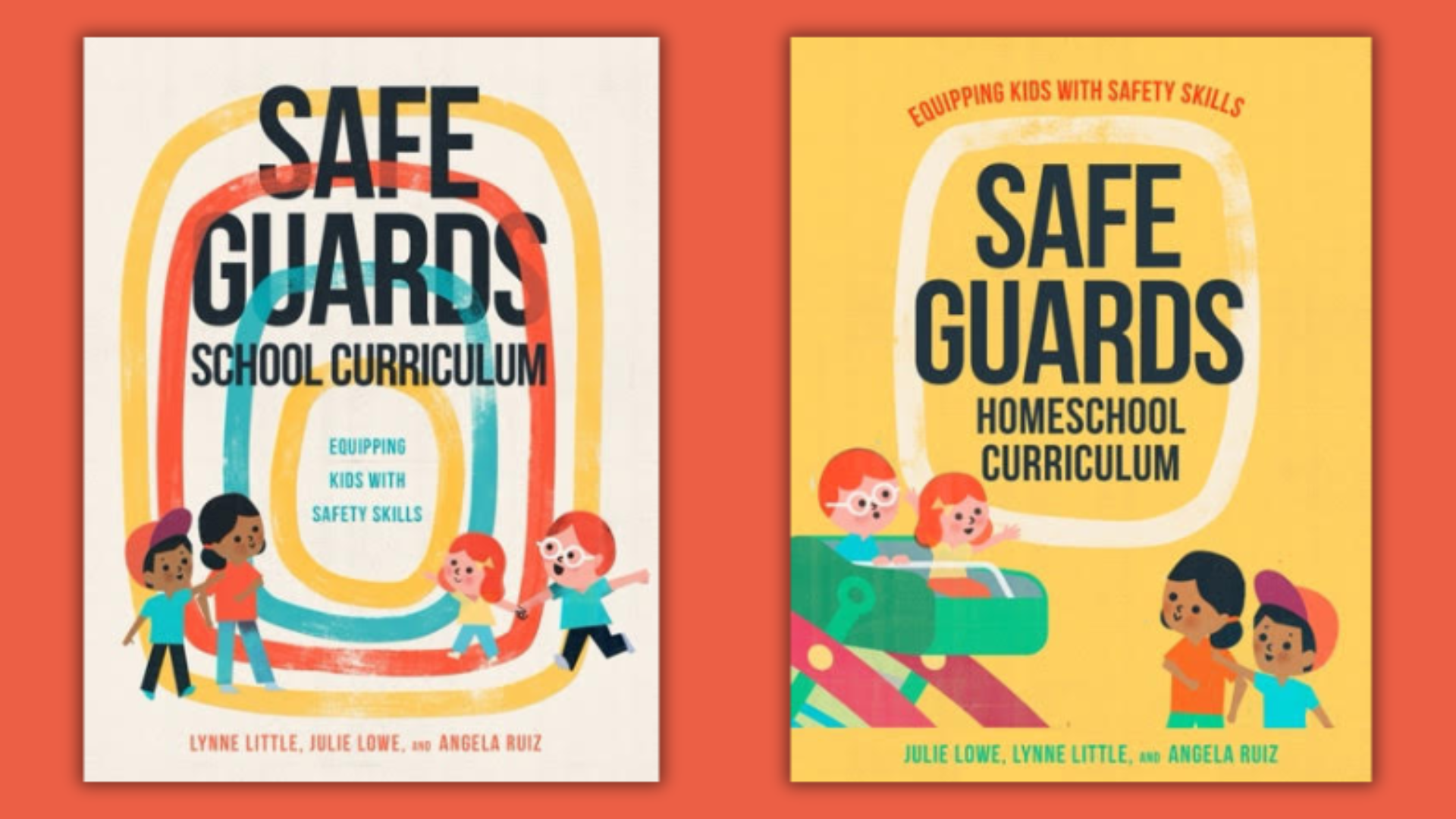
    That’s the heartbeat of Safeguards for Schools, a six-unit, K–5 abuse awareness and prevention curriculum built on Scripture and designed for use across the Christian community, schools, churches, co-ops, and homes.

    A Curriculum for Classrooms, Churches, and Families

    While Safeguards for Schools was initially developed with Christian classrooms in mind, its flexible structure makes it ideal for a wide variety of ministry and family settings.

    Children’s ministries can use the lessons in Sunday school, children’s church, or midweek programs. Christian co-ops and hybrid models will appreciate the clear structure and biblical integration. Homeschool families can access an abridged version that offers a high-level overview of the initial three units with clear objectives and discussion prompts to guide gospel-centered conversations at home.

    This curriculum fits wherever children are being discipled.

    One of the most valuable companion tools for families, whether they homeschool or simply want to reinforce what’s taught at church or school, is the book Safeguards: Shielding Our Homes and Equipping Our Kids, written by counselor, Julie Lowe. Her book is an ideal parenting resource for learning alongside your children. In fact, Julie’s biblical framework laid much of the foundational structure for the Safeguards for Schools curriculum, and she co-authored the program through the creation of the Parent Pages found in every unit, ensuring that classroom instruction flows seamlessly into the home.

    A Cultural Crisis Demands a Discipleship Response

    We live in a culture that is no longer passively drifting from Christian values, it is aggressively opposing them.

    Children today face unprecedented exposure to harmful messages, behaviors, and individuals, often without leaving their homes. Streaming platforms normalize confusion. Online games connect kids to strangers. Social media blurs healthy boundaries and elevates oversharing. Grooming doesn’t just happen in person anymore, it happens in direct messages, gaming chats, and anonymous forums.

    “For the Lord gives wisdom; from His mouth come knowledge and understanding.” — Proverbs 2:6

    “Let the wise listen and add to their learning and let the discerning get guidance.” — Proverbs 1:5

    “Solid food is for the mature, who by constant use have trained themselves to distinguish good from evil.” — Hebrews 5:14

    This is not about fear, it’s about formation. Safeguards for Schools helps children grow in biblical discernment and equips them with tools to:

    • Recognize unsafe behavior
    • Use their voice with wisdom and confidence
    • Identify multiple trusted adults
    • Evaluate actions, boundaries, and motives through God’s Word
    • Understand their worth as image-bearers of Christ

    Practical Support from ECAP

    The Evangelical Council for Abuse Prevention (ECAP) is an essential ally in the work of protecting children in Christian environments. ECAP provides standards, resources, and training to help Christian organizations, schools, ministries, and churches, create safer environments for children and youth.

    Their mission is clear: to support abuse prevention through biblical guidance, practical tools, and institutional accountability. ECAP also offers a readiness checklist, organizational accreditation, and response plan guidance for ministries seeking to improve or assess their current protocols. ECAP’s partnership helps schools and churches not only meet legal expectations, but build a proactive, gospel-driven culture of safety.

    Safeguards for Schools aligns with ECAP’s vision by providing a practical, biblically grounded curriculum that fulfills prevention mandates while cultivating wisdom and discernment in students.

    Complies with State Requirements Without Compromise

    Many states now require that students receive instruction in abuse awareness and prevention. This creates pressure for schools and ministries to adopt resources that may not align with their beliefs.

    Safeguards for Schools is the solution:

    • Satisfies state mandates
    • Built on a biblical worldview
    • Emotionally safe and developmentally appropriate
    • Easy to implement, no special training required
    • Protects childhood innocence and theological integrity

    Biblical, Practical, and Parent-Friendly

    This is not a sex education curriculum. Safeguards for Schools does not introduce explicit anatomy, gender ideology, or any form of content that undermines Christian conviction or betrays childhood innocence. Instead, it offers:

    • Story-based instruction for grades K–2 and 3–5 learners
    • Clear teacher and leader scripts
    • Interactive role-playing and guided reflection
    • Developmentally-appropriate academic exercises and engagement activities
    • Parent Pages that extend the conversation into the home

    Whether taught in a Bible class, children’s ministry, or homeschool day, every lesson is designed to reinforce biblical truth and provide safe, age-appropriate instruction.

    How to Get Started

    If you’re a parent, pastor, educator, or ministry leader, here’s how to bring Safeguards for Schools: Equipping Kids with Safety Skills into your community:

    1. Visit www.newgrowthpress.com to preview content and examples
    2. Purchase and Download the homeschool or parent version for use at home
    3. Recommend Julie Lowe’s book Safeguards to parents as a trusted companion guide
    4. Schedule a curriculum preview for your school or church staff
    5. Use ECAP’s free safety checklists to assess your organization’s readiness

    “All your children shall be taught by the Lord, and great shall be the peace of your children.” — Isaiah 54:13

    Now Is the Time

    We’ve spent time and resources training the adults. But now we must train the children, not with fear, but with faith, truth, and practical wisdom.

    The world is loud. But wisdom can be louder. Let’s raise a generation of children who are not only protected by the adults around them, but equipped by the Word within them.

    Let’s start now!